
For many landowners in South Carolina, one question comes up again and again:
Why are developers so interested in land throughout Charleston, Berkeley, and Dorchester Counties?
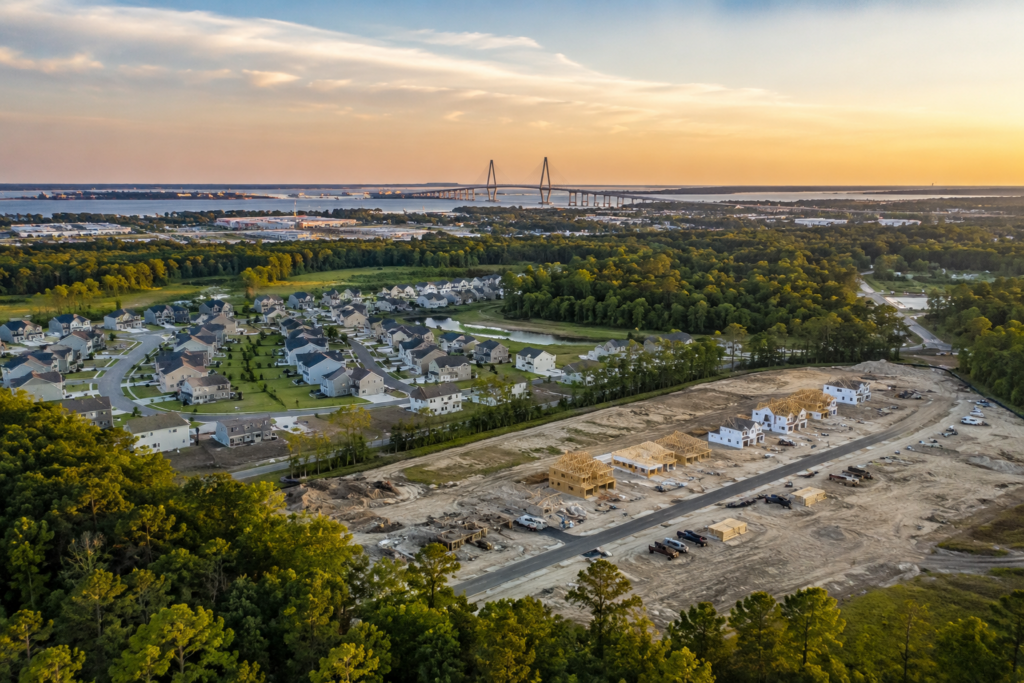
Drive through almost any part of the Tri-County region today, and you’ll see evidence of continued growth. New neighborhoods, retail centers, schools, road improvements, and business parks seem to appear every year. While some areas still have large tracts of undeveloped land, much of the region has already undergone significant transformation over the past several decades.
For landowners, understanding why developers focus on this area can provide valuable insight into how land is viewed, what drives demand, and why certain properties may become more attractive over time.
What Makes the Tri-County Region Different?
The Tri-County region—Charleston, Berkeley, and Dorchester Counties—has become one of the most active development areas in South Carolina.
Unlike many rural markets where growth happens slowly, the Tri-County area benefits from several long-term advantages that continue to attract residents, employers, and investment.
These advantages include:
- Access to major transportation corridors
- Proximity to the Port of Charleston
- Growing employment opportunities
- Expanding healthcare and education systems
- Established utility infrastructure
- Strong demand for housing
The result is a region that has experienced consistent population growth over many years rather than temporary spikes driven by short-term market cycles.
For developers, stability matters. Areas with long-term population growth tend to support future residential communities more reliably than areas with stagnant or declining populations.
Infrastructure Often Determines Where Development Happens
Many landowners assume location alone drives development. While location is important, infrastructure is often the deciding factor.
Developers typically look for areas where services already exist or can be extended reasonably. These services include:
- Public water
- Public sewer
- Road access
- Stormwater systems
- Schools and emergency services
A 20-acre property near existing utilities may be significantly more attractive than a larger tract located far from infrastructure.
This is one reason why many portions of Charleston, Berkeley, and Dorchester Counties have seen substantial development over time. As utility systems expanded outward from established communities, previously rural land became more feasible for residential projects.
For example, land near growing areas such as Summerville, Goose Creek, Moncks Corner, and Johns Island often attracts attention because infrastructure improvements have gradually opened new opportunities for development.
You can learn more about local market trends by exploring our county-specific resources and regional land development insights throughout South Carolina.
Population Growth Creates Demand for New Communities
Development does not happen simply because land is available.
It happens because people need places to live.
As populations increase, demand grows for housing, schools, retail centers, medical facilities, and supporting services. Developers often study population trends years before purchasing land because those trends help indicate future demand.
In the Tri-County region, growth has been supported by:
- Job creation
- Relocation from other states
- Military-related employment
- Manufacturing expansion
- Port-related industries
- Quality-of-life factors that attract new residents
When developers evaluate land, they are often looking several years into the future. A property that appears rural today may be located directly in the path of future growth based on population and infrastructure projections.
This forward-looking perspective is one reason some landowners receive inquiries long before nearby development becomes obvious.
Why Some Land Gets Developed While Other Parcels Do Not
Not every property is suitable for development.
Developers spend considerable time evaluating factors such as:
Zoning and Future Land Use
Local governments establish zoning regulations and long-range planning goals. Properties that align with future growth plans often receive more attention than parcels located in conservation or low-density areas.
Environmental Conditions
Wetlands, flood zones, protected habitats, and topography can significantly influence development potential.
A property may have substantial acreage, but only a portion of it may be suitable for building.
Access
Road frontage and transportation access are critical considerations. Even a well-located property can face challenges if access is limited.
Utility Availability
Water and sewer access remain among the most important factors in residential development.
Landowners are often surprised to learn that utility availability can dramatically impact how a property is evaluated.
Because every property is unique, development potential cannot be determined solely by acreage or location.
What This Means for Landowners
For landowners in the Tri-County region, understanding the factors that drive development can provide useful context when considering future options.
Even if you are not planning to sell today, it can be helpful to understand:
- How nearby growth may affect your property
- Whether utility expansions are occurring nearby
- How local planning initiatives may influence future land use
- What developers typically evaluate when reviewing land
Many properties that were once considered remote or purely agricultural have become increasingly attractive as surrounding communities expanded.
That does not mean every property will be developed, but it does highlight the importance of staying informed about local growth patterns.
If you’re interested in learning more about specific markets, consider exploring our local resources, including information about South Carolina county real estate trends and land development activity across the region.
Looking Ahead
The Tri-County region has experienced decades of growth, and many of the factors that attracted development in the past continue to influence land decisions today.
Strong infrastructure, population growth, economic activity, and long-term planning have helped shape Charleston, Berkeley, and Dorchester Counties into some of the most active development areas in South Carolina.
For landowners, understanding these trends can make it easier to evaluate opportunities, ask informed questions, and make decisions that align with long-term goals.
If you own land in South Carolina and are exploring your options, our team is always happy to share insights and answer questions. You can also visit our Sell Your Land page or Contact Us page to learn more about how we evaluate properties and assist landowners throughout the state.