
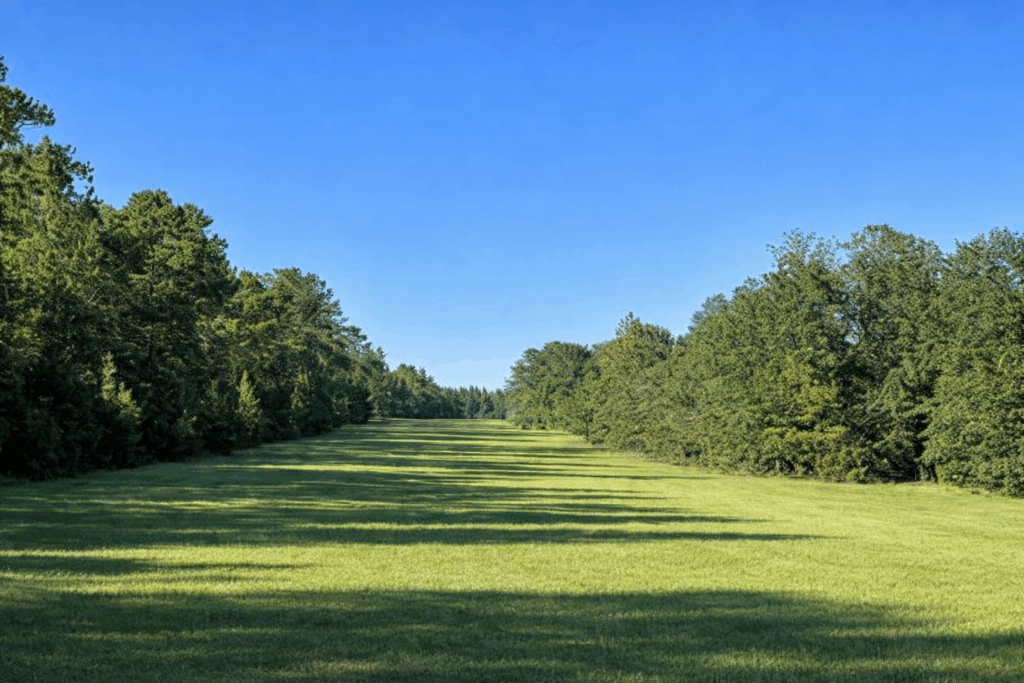
Owning vacant land can feel like holding onto potential without a clear path forward. You know it has value—but how much, to whom, and what’s the best way to move forward?
Whether you inherited land, bought it years ago, or simply held onto it as an investment, understanding how vacant land works in today’s market can make a big difference. The truth is, land doesn’t behave like houses. It requires a different lens.
If you’re trying to make sense of your property—or thinking about selling—here’s a grounded look at how vacant land investing works in South Carolina.
Understanding What Makes Land Valuable
Not all land is created equal, even if it looks similar on the surface.
Two parcels with the same size can have completely different values depending on a few key factors:
- Zoning and permitted use
What can legally be built on the property? Residential, agricultural, commercial? This often drives the highest value. - Access and road frontage
A paved road with direct access is far more attractive than a landlocked parcel. - Utilities availability
Water, sewer, and power can significantly impact development potential. - Location and growth patterns
Land near expanding towns, highways, or schools tends to gain more attention over time.
For example, a 20-acre tract just outside a growing town with water and sewer nearby will typically be viewed very differently than a similar-sized property in a remote rural area with no utilities.
The Difference Between Holding Land and Developing It
A common assumption is that land automatically increases in value over time. Sometimes it does—but not always in the way people expect.
There are generally two paths:
1. Holding Land Long-Term
This is the “wait and see” approach. Owners hope that nearby growth eventually increases demand.
This can work, but it often depends on:
- Infrastructure expansion
- Population growth
- Nearby development activity
2. Positioning Land for Development
This is where most of the value is created.
Developers look at land differently. They evaluate:
- How many lots can be created
- What homes in the area are selling for
- How quickly homes are selling (absorption rate)
If a property fits those criteria, it becomes more than just land—it becomes a potential project.
Why Some Properties Attract More Interest Than Others
If you’ve ever wondered why some land sells quickly while others sit for years, it usually comes down to how “buildable” the property is.
Here are a few things that can make a property more attractive:
- Minimal wetlands or floodplain impact
- Good topography (not too steep or uneven)
- Nearby residential development
- Proximity to schools, grocery stores, and main roads
On the flip side, properties with heavy environmental constraints or limited access can be harder to sell—not impossible, just more niche.
This is where having a clear understanding of your property helps. Even small details can change how buyers evaluate it.
How Investors and Developers Look at Your Land
Most individual buyers think in terms of price per acre.
Developers don’t.
They look at land in terms of what it can produce.
For example:
- If a 50-acre tract can yield 100 lots
- And homes in the area sell well
- The land becomes part of a larger financial equation
This is why two similar properties can receive very different offers. One might be ideal for a subdivision, while the other may only work for a single home or recreational use.
If you’re curious how this applies locally, it can help to explore area-specific trends—like what’s happening in nearby counties or cities. (For example, you might look into a post like “South Carolina County Real Estate Trends” to see how development is evolving in your area.)
When It Might Make Sense to Sell
There’s no single “right time” to sell land, but there are a few situations where owners often start considering it:
- You’re not using the property and don’t plan to
- Property taxes or maintenance are becoming a burden
- The area is starting to develop
- You’ve held the land for years and want to unlock its value
In many cases, landowners don’t realize how their property fits into current development patterns until they take a closer look.
Even a simple conversation or review can provide clarity on what options are available.
A Practical Way to Think About Your Next Step
If you own land in South Carolina, it doesn’t always require a major decision right away.
Sometimes the best first step is just understanding:
- What your land could be used for today
- What it might look like in a few years
- Who the likely buyers are
From there, you can decide whether to hold, sell, or explore other options.
If you’re interested in learning more about how landowners typically approach selling, you can also visit our Sell Your Land page or reach out through our Contact Us page for general guidance.