
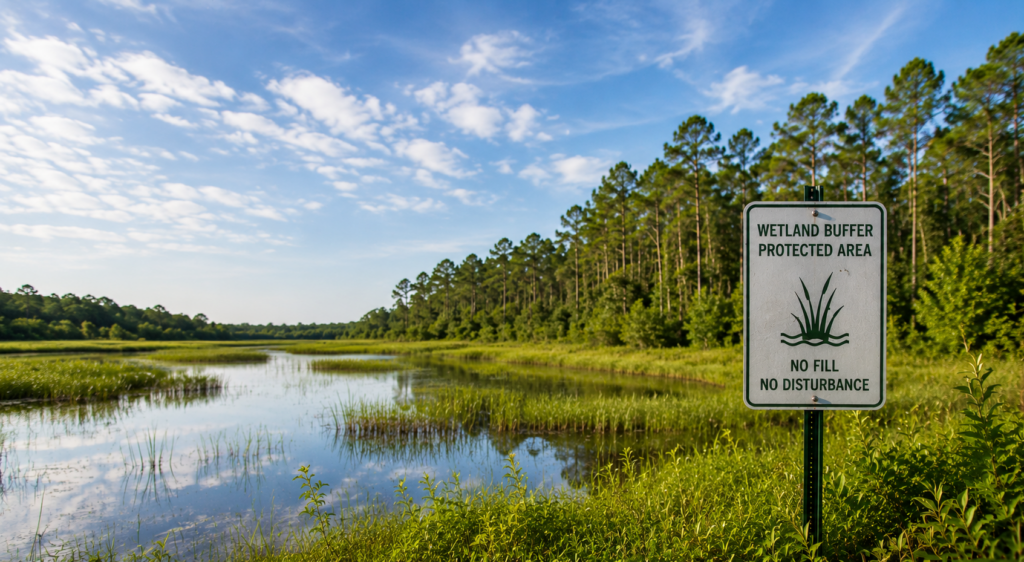
For many landowners, wetlands are one of the most misunderstood features on a property. Some owners assume wetlands make land unusable, while others discover too late that environmental regulations can affect how much of their property can actually be developed.
In recent years, Horry County has taken a closer look at how development interacts with wetlands. One of the most discussed changes has been the introduction of wetland buffer requirements, which create additional space between development activities and protected wetland areas.
If you own vacant land in Horry County—or are considering selling property there—understanding how wetland buffer regulations work can help you make more informed decisions about your land’s potential and value.
What Is a Wetland Buffer?
A wetland buffer is an area of land that must remain undisturbed between a wetland and certain development activities.
Think of it as a protective zone designed to help preserve water quality, wildlife habitat, and natural drainage patterns. While wetlands themselves have long been regulated by state and federal agencies, buffer requirements add another layer of consideration for property owners and developers.
In practical terms, a property may contain wetlands that cannot be built upon, but a buffer regulation may also restrict development in the area immediately adjacent to those wetlands.
For landowners, this means that the total area available for homes, roads, utilities, or other improvements can sometimes be smaller than the property’s overall acreage suggests.
Why Horry County Introduced Buffer Requirements
Horry County has experienced significant growth over the past several years. As residential development expands into previously undeveloped areas, county officials have increasingly focused on balancing growth with environmental protection.
Wetlands play an important role in managing stormwater, reducing flooding risks, and filtering pollutants before they enter nearby waterways.
Buffer requirements are intended to help maintain those functions by creating separation between development and environmentally sensitive areas.
While regulations can change over time, the general purpose remains consistent: protecting natural resources while allowing responsible growth throughout the county.
How Wetland Buffers Can Affect Vacant Land
One of the biggest misconceptions among landowners is that wetlands only matter if someone plans to build directly on them.
In reality, buffer requirements can influence development potential even when construction is proposed outside the wetland itself.
For example, imagine a 20-acre property with several acres of wetlands scattered throughout the site. Even if the wetlands occupy only a portion of the land, required buffers around those areas could reduce the amount of buildable acreage available for homesites, roads, or community amenities.
This doesn’t necessarily mean the property loses value. However, it can change how a developer evaluates the site and how many lots may ultimately be achievable.
The impact often depends on factors such as:
- The location of the wetlands
- The size and shape of the property
- Existing road frontage
- Utility availability
- Local zoning requirements
- Overall development goals
Properties with strategically located wetlands may still offer strong development opportunities, while others may require more creative planning.
Why Every Wetland Property Is Different
Not all wetlands affect land in the same way.
Some properties contain isolated wetland pockets that have minimal impact on development plans. Others may have larger wetland systems that influence access, lot layouts, or infrastructure placement.
This is why experienced land buyers and developers typically perform environmental reviews early in the evaluation process.
Two parcels with identical acreage can have very different outcomes depending on how wetlands and buffers are distributed across the property.
For landowners, this highlights the importance of understanding more than just acreage. Factors such as zoning, utilities, road access, topography, and environmental constraints often work together to determine a property’s overall potential.
If you’re interested in how these factors affect land values throughout the region, consider reading our related guide on Horry County land and real estate trends in South Carolina.
What Sellers Should Know Before Listing Land
If your property contains wetlands, there’s no reason to assume it cannot be sold or developed.
Many successful residential communities throughout Horry County have been built on properties containing wetlands. The key is understanding how environmental features fit into the larger development picture.
Before marketing land, it can be helpful to gather:
- Parcel maps
- Survey information
- Wetland studies (if available)
- Utility information
- Zoning details
- Access information
Having this information readily available often helps potential buyers evaluate a property more efficiently and accurately.
In some cases, a developer may actually view natural features as an asset. Wetlands and preserved open space can contribute to community design, provide visual appeal, and support stormwater management strategies.
Looking Ahead
As Horry County continues to grow, environmental regulations will likely remain an important part of the development process.
For landowners, understanding wetland buffer requirements can provide valuable insight into how a property may be viewed by future buyers, developers, and investors.
While regulations may influence how land is planned and developed, they are only one piece of the larger picture. Location, zoning, infrastructure, market demand, and surrounding development patterns all play important roles in determining a property’s potential.
If you own land in Horry County, taking the time to understand these factors can help you make better decisions whether you plan to hold, develop, or sell your property in the future.
For additional resources, you can explore our local market articles throughout South Carolina or visit our Sell Your Land page to learn more about how landowners evaluate their options.
If you own land in South Carolina and are exploring your options, our team is always happy to share insights and answer questions.