
It’s one of the most common questions landowners ask:
“If my neighbor has 10 acres and I have 10 acres, why are the values so far apart?”
On paper, acreage feels like a straightforward way to compare land. But in reality, two parcels with the same size can have dramatically different values depending on what’s under the surface, around the property, and allowed by local regulations. Understanding these differences can help landowners set realistic expectations and avoid costly assumptions.
Below are the key reasons acreage alone rarely tells the full story.
Location Is More Than Just the County Name
Two parcels might both sit in South Carolina, but their true value often comes down to where within the county they’re located.
Land closer to growing towns, employment centers, schools, or major highways typically carries more demand. Even being a few miles closer to utilities or paved roads can shift value significantly.
For example, a 15-acre tract near an expanding corridor in a fast-growing county may attract developers, while another 15 acres farther out—though perfectly usable—may appeal to a much smaller buyer pool.
This is why county- or city-specific context matters. A parcel in one part of a county can behave very differently from land just a short drive away. (This is also why many landowners find county-focused resources like “South Carolina County Real Estate” helpful when researching local trends.)
Zoning and What the Land Is Allowed to Be Used For
Zoning is often the biggest value divider between two similarly sized parcels.
One parcel might allow residential development, while another is limited to agricultural or low-density use. Even within residential zoning, differences in minimum lot size, setbacks, or subdivision rules can drastically affect how many homes can be built—or whether development is practical at all.
A simple example:
- Parcel A: 20 acres allowing one home per acre
- Parcel B: 20 acres allowing one home per five acres
Even though the acreage is identical, the potential use—and value—can be worlds apart.
Access, Road Frontage, and Utilities
A parcel that’s landlocked or accessed by a long private easement is typically valued lower than land with clear, legal road frontage.
Utilities matter just as much. Land with nearby water, sewer, and power is usually more attractive to buyers than land requiring wells, septic systems, or long utility extensions. These costs don’t always show up on a listing, but experienced buyers factor them in quickly.
Two 10-acre parcels can look identical on a map—until one requires significant upfront infrastructure costs and the other doesn’t.
Physical Characteristics You Can’t Ignore
Topography, wetlands, flood zones, and soil quality all influence value.
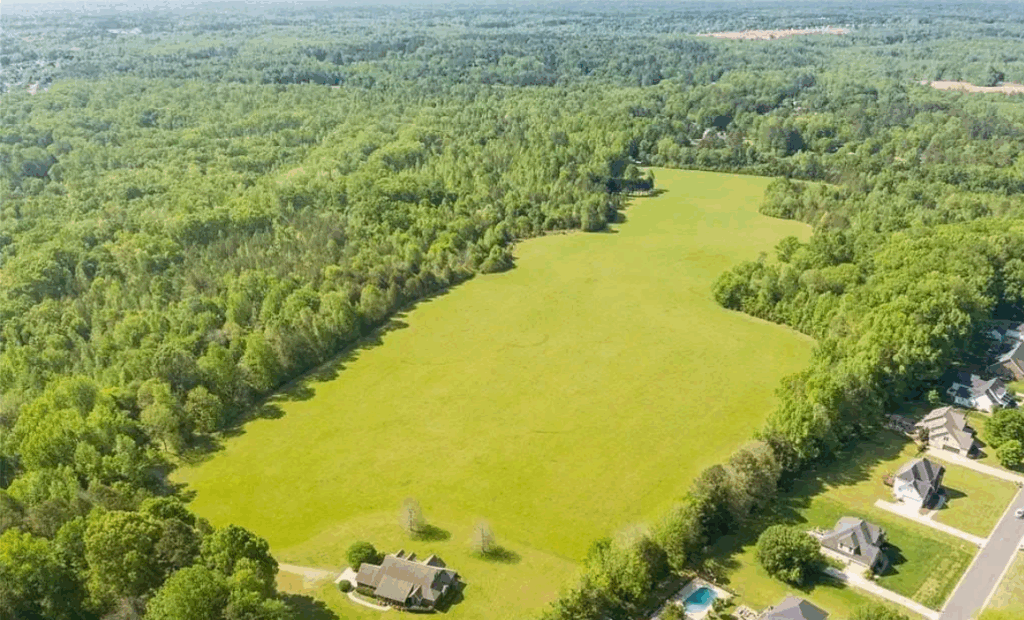
Flat, dry land is generally easier and less expensive to build on than land with steep slopes, heavy tree cover, or environmental constraints. A parcel with wetlands or floodplain may still have value, but the usable portion of the land is what buyers focus on—not the total acreage number.
This is one reason aerial views and environmental overlays often change how land is evaluated once deeper research begins.
Market Demand and Buyer Type
Not all land is competing for the same buyers.
Some parcels attract builders and developers. Others appeal more to recreational buyers, long-term holders, or neighboring landowners. Demand within a specific area—and for a specific type of land—plays a huge role in value.
In areas seeing steady growth, development-ready parcels tend to carry a premium. In quieter markets, land value may be driven more by lifestyle use or long-term holding potential.
Why Acreage Alone Can Be Misleading
Acreage is easy to understand, which is why it’s often the first number people look at. But land value is shaped by a combination of legal, physical, and market factors working together.
That’s also why online estimates or comparisons based only on size can be misleading. Two parcels can share the same acreage and still live in completely different value categories.
If you own land in South Carolina and are exploring your options, our team is always happy to share insights and answer questions. You can learn more about selling land by visiting our Sell Your Land page or reaching out through our Contact Us page—no pressure, just information.