
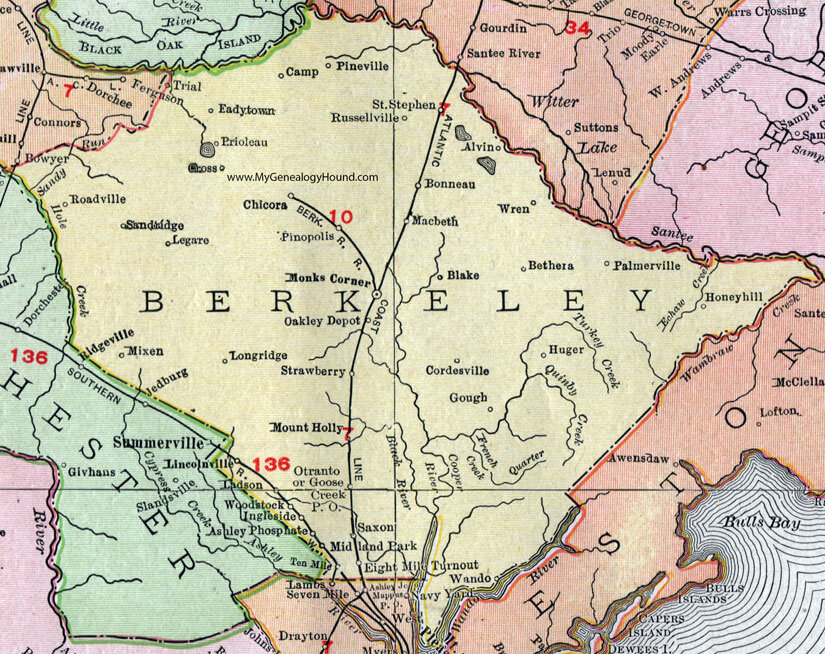
The term MS4 (Municipal Separate Storm Sewer System) may sound technical, but it has real implications for property owners, developers, planners, and local government in Berkeley County, South Carolina. In this post, we’ll demystify what the MS4 area means in Berkeley County, walk through key regulatory requirements, and explore how compliance affects land development and management.
What is an MS4?
An MS4 is a network of stormwater conveyances — such as catch basins, curbs, gutters, ditches, man-made channels, pipes, and tunnels — that collect and channel stormwater runoff and discharge it into Waters of the State, separate from sanitary sewer systems.
In South Carolina, operators of regulated MS4s must secure NPDES permit coverage and meet a set of obligations designed to reduce pollutant discharges and protect water quality.
Berkeley County is classified as a Phase II MS4 jurisdiction, meaning it must meet minimum control measure requirements, monitor discharges, adopt infrastructure standards, and enforce compliance within its regulated area.
The Berkeley County MS4 Program: Structure & Goals
Berkeley County’s MS4 / Stormwater Management Program (SWMP) is built around the federally mandated “minimum control measures” (MCMs).
Here’s a breakdown of key program components:
Additionally, Berkeley County has adopted a Stormwater Design Standards Manual (adopted December 1, 2009) that provides technical guidelines on how to design drainage, erosion control, BMPs, and site layout to comply with permit requirements.
To fund program implementation, the county collects a Stormwater Utility Fee from developed properties (residential, commercial, nonprofit) based on impervious surface.
Importantly, properties that remain undeveloped, or those classified as agricultural / forestland, are generally exempt from the fee.
Regulatory Impacts on Land Use, Development & Ownership
For real estate developers, landowners, or investors in Berkeley County (or jurisdictions under its intergovernmental agreements such as Goose Creek or Hanahan), MS4 regulations impose several considerations:
- Upfront Planning & Compliance
- Added Costs
- Design Constraints & Density
- Because regulations push toward minimizing impervious surfaces, using pervious pavements or preserving natural drainage, site layouts may change (less parking, more green buffers).
- Long-Term Maintenance & Liability
- BMPs required under post-construction maintenance must be maintained in perpetuity, and failure to do so can trigger penalties or corrections by the county.
- Permitting Coordination & Timeline Impacts
- Appeals & Credits
Thus, for someone considering buying or developing vacant land in Berkeley County, understanding whether the site lies within a regulated MS4 area is essential.
How to Determine MS4 Areas in Berkeley County
- Berkeley County (and its partner municipalities) maintain mapping of the MS4 service area.
- The South Carolina Department of Health & Environmental Control provides MS4 designations and mapping tools.
- When submitting plans, county staff will determine whether a parcel is under MS4 jurisdiction, and require applicable stormwater submittals during review.
- If in Moncks Corner (within Berkeley County), the town itself enforces its own stormwater permitting program under South Carolina Regulation 72-300 starting June 1, 2021.
Best Practices & Tips for Landowners / Developers
- Early coordination with county stormwater engineering is critical — don’t wait until final plan to figure out drainage design.
- Integrate low-impact development (LID) techniques: rain gardens, permeable pavements, green roofs, bioswales, natural buffer zones.
- Keep impervious coverage as low as feasible, cluster development, preserve natural features.
- Ensure you have long-term maintenance plans for your BMPs, and document them in required maintenance covenants.
- Monitor and inspect during construction to prevent sediment runoff and illicit discharges.
- Stay current on annual reporting requirements, public outreach obligations, and regulatory updates from the county or South Carolina regulatory bodies.
The MS4 program in Berkeley County, South Carolina is more than just a regulatory box to check — it’s a framework that shapes how land is developed, demands higher-quality stormwater design, and ensures that growth and water quality protection go hand in hand. For real estate investors, developers, and landowners, understanding MS4 boundaries, design obligations, ongoing maintenance, and stormwater costs is essential.