
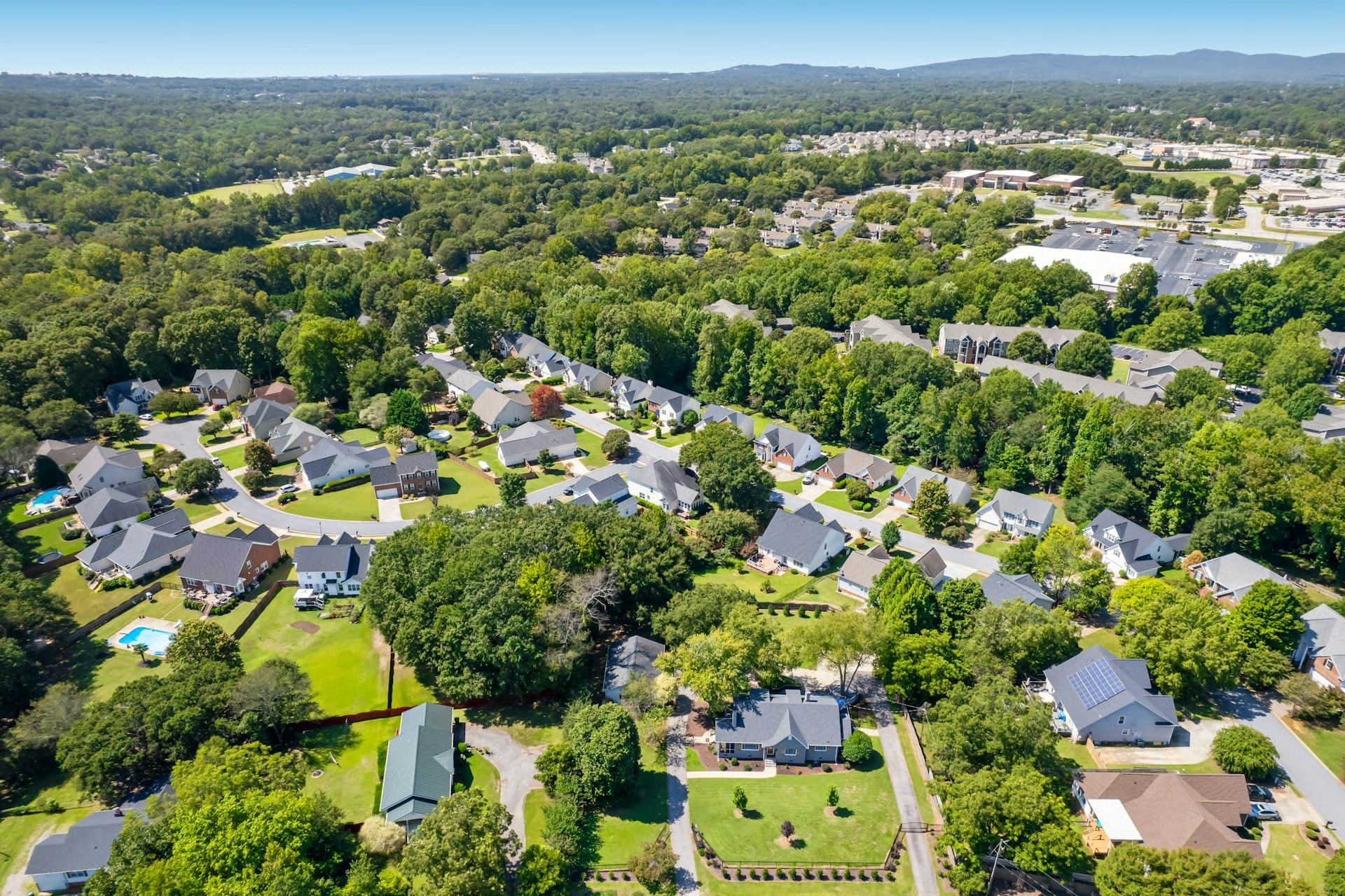
A Building Boom Across South Carolina
Over the past few years, South Carolina has become one of the Southeast’s most dynamic real estate markets. With its growing economy, business-friendly environment, and scenic coastal and inland communities, developers are rapidly transforming once-rural areas into thriving neighborhoods. But where exactly is this growth happening fastest?
Let’s take a closer, data-driven look at the top South Carolina counties fueling the state’s housing and development surge.
1. Horry County: The Coastal Powerhouse
- Population Growth: Over 400,000 residents and counting
- Key Cities: Myrtle Beach, Conway, Loris
- Growth Factors: Tourism, coastal migration, and affordable land
Horry County continues to dominate in both residential construction and population inflow. With Myrtle Beach as a national destination and new infrastructure projects underway, builders are expanding inland toward Conway and Aynor. The demand for single-family homes, retirement communities, and second-home developments remains at an all-time high.
2. Berkeley County: The Industrial and Suburban Hub
- Population Growth Rate: Among the top three in South Carolina
- Key Areas: Summerville, Moncks Corner, Goose Creek
- Growth Drivers: Proximity to Charleston, industrial expansion, and affordable housing
Berkeley County has seen major investments from companies like Volvo and Google, sparking rapid job creation and residential demand. Developers are capitalizing on its balance of accessibility and affordability — a short commute to Charleston with more room for new subdivisions and master-planned communities.
3. Dorchester County: Family-Friendly and Fast-Growing
- Population Increase (Last Decade): Nearly 20%
- Key Areas: Summerville, Ridgeville, St. George
Dorchester County offers a unique blend of small-town charm and suburban convenience. Summerville’s reputation as one of South Carolina’s most desirable towns continues to attract families and homebuilders alike. Ridgeville and St. George are emerging as affordable alternatives where larger tracts are being turned into residential neighborhoods.
4. Charleston County: The High-Value Market
- Median Home Price: Among the highest in the state
- Key Areas: Johns Island, West Ashley, North Charleston
While Charleston’s land prices are higher, its long-term appreciation and desirability make it a magnet for upscale developments and infill projects. Many builders are targeting the outer islands and rural corridors like Johns Island and Ravenel, where there’s still available land with quick access to the city core.
5. Greenville County: Upstate’s Economic Engine
- Population: Over 550,000
- Key Cities: Greenville, Simpsonville, Mauldin
Greenville County anchors South Carolina’s Upstate growth corridor, fueled by strong job markets in manufacturing, logistics, and healthcare. Developers continue to push outward, turning former farmland into vibrant residential and mixed-use communities. The area’s quality of life and job diversity keep it a consistent growth leader.
6. Lexington & Richland Counties: The Midlands Momentum
- Key Cities: Columbia, Cayce, Irmo, Lexington
- Growth Drivers: State capital influence, education, and healthcare
Together, these two counties form the core of the Columbia metro area — a region witnessing steady infill and suburban development. New single-family communities, townhome projects, and infill redevelopment are driving local growth, especially near major highways and employment centers.
The Takeaway: A State on the Rise
South Carolina’s growth story isn’t just about population numbers — it’s about transformation. From coastal towns to Upstate metros, developers are identifying opportunity zones where infrastructure, affordability, and livability intersect.
For landowners, this growth wave means increasing property values and stronger demand from builders. For builders and investors, it signals that now is the time to secure tracts in the next emerging county before prices climb further.
At Southern Acres Land Co., we help connect opportunity with vision — turning raw land into tomorrow’s communities across the Carolinas.