
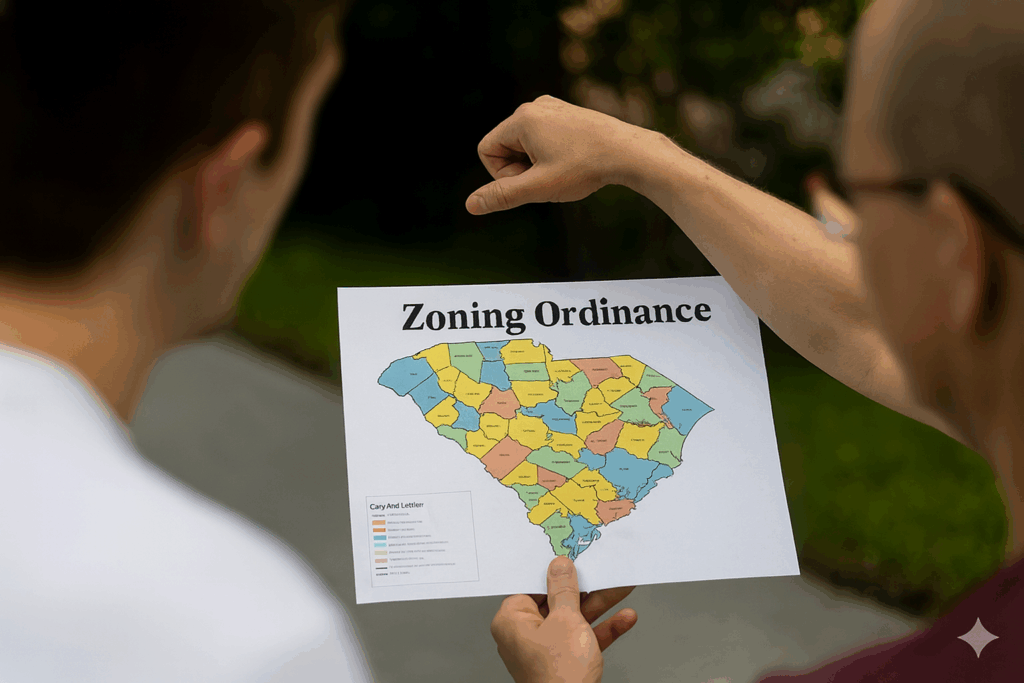
Whether you’re planning to sell, build, or simply understand your property’s value, zoning plays a big role in what you can do with your land. In South Carolina, zoning determines how your land can be used—residential, commercial, agricultural, or something else.
Here’s a simple, step-by-step guide on how to find out your land’s zoning and what those codes really mean for you.
Step 1: Gather Your Property Details

Before you start your zoning search, you’ll need a few basic details:
- Parcel Number (Tax Map ID or TMS) – found on your property tax bill or county assessor’s website.
- Address or General Location – especially useful if you don’t have the parcel number handy.
These details will help you find your property on the county’s GIS or zoning map.
Step 2: Visit Your County’s GIS or Zoning Map
Most South Carolina counties have an online GIS (Geographic Information System) that shows zoning layers.
Here’s how you can use it:
- Go to your county’s GIS website.
- Type your parcel number or property address in the search bar.
- Once your parcel appears, look for a Zoning or Layers section.
- Note the zoning code (for example: R-1, AG, GC, or RM-10).
Each code represents specific rules for what can be built or developed on your property.
Step 3: Check the Zoning Definition
After finding your zoning code, go to your County’s Zoning Ordinance or Unified Development Ordinance (UDO).
Here’s what to look for:
- Permitted Uses – what you can do by right (e.g., build a single-family home).
- Conditional or Special Uses – what requires additional approval (e.g., a duplex or home-based business).
- Minimum Lot Size, Setbacks, and Density – determines how much land you need and where you can build.
Understanding these details helps you know whether your land is ideal for residential, agricultural, or commercial use.
Step 4: Call the Local Planning or Zoning Department

If anything is unclear, contact your county’s planning or zoning department.
They can:
- Confirm your property’s zoning.
- Explain development restrictions or overlays (like flood zones or historic districts).
- Advise whether rezoning or variances are possible.
Speaking directly with staff ensures you have the most accurate and current information.
Step 5: Evaluate What You Can Do With the Land
Once you know your zoning, it’s time to evaluate your options:
- Build a Home: Great for residential or rural-zoned lots.
- Subdivision or Development: Possible if your zoning and utilities support it.
- Hold or Sell: Properties with favorable zoning often attract developers or investors.
At Southern Acres., we help landowners in South Carolina understand their property’s true potential—whether that means preparing it for sale, subdivision, or development.
Step 6: Partner With a Local Land Expert
Zoning can be complex, but you don’t have to figure it out alone. Our team at Southern Acres. specializes in analyzing zoning, utilities, and development potential across South Carolina.
If you’re curious about your land’s value or want to know what’s possible under current zoning, we can help you unlock its full potential.
👉 Connect With Us Today to get a free property review and learn your land’s development potential.
Understanding your land’s zoning isn’t just about what you can’t do—it’s the first step to discovering what’s possible. Whether you’re planning to sell or develop, knowing your zoning gives you the power to make informed, profitable decisions about your property in South Carolina.